Deploy Joy - Salesforce Solutions Services
Deploy Joy - Salesforce Solutions Services
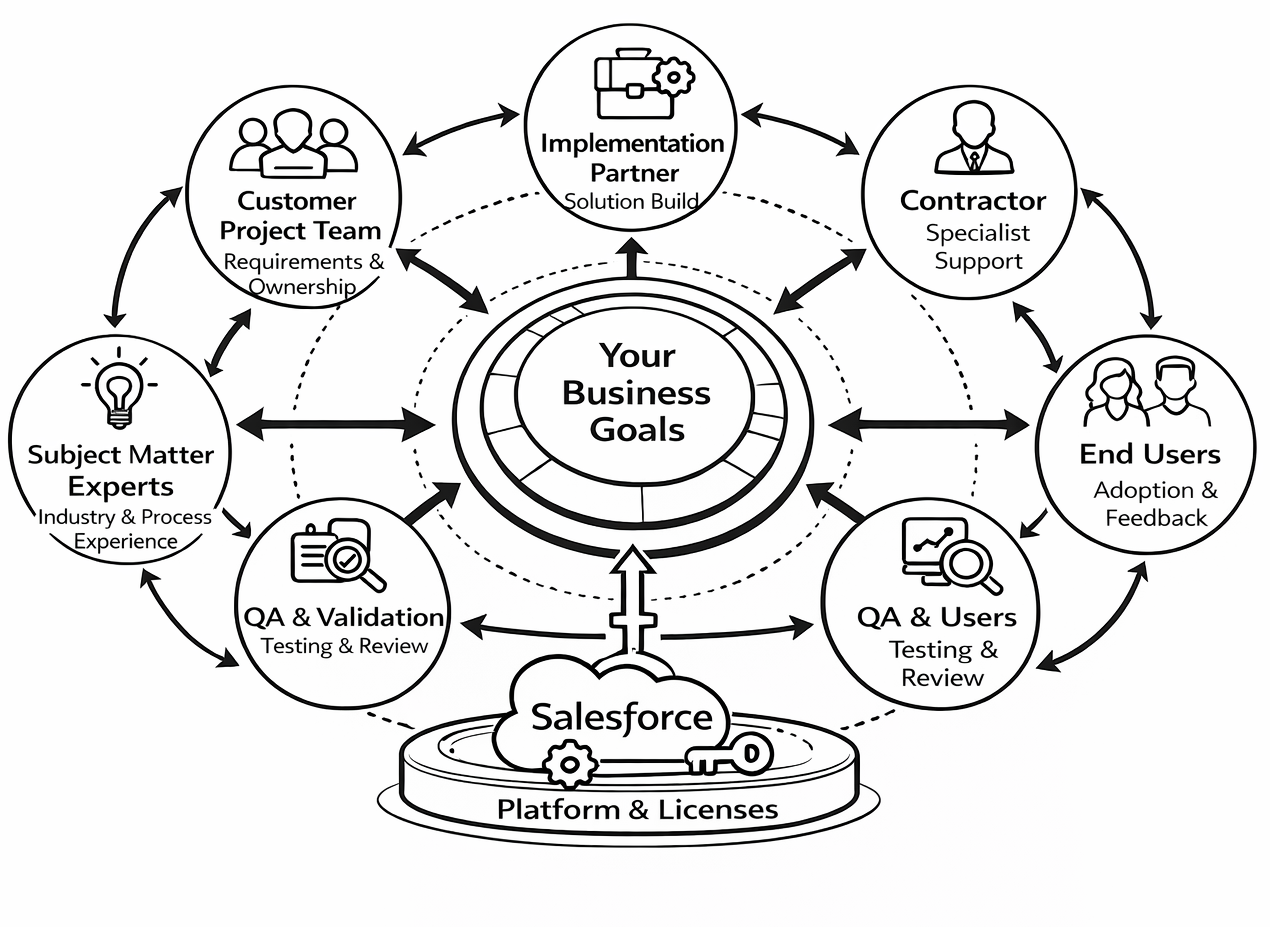
Salesforce operates through a combination of roles:
Salesforce itself provides the platform. How it works in practice depends on how it is designed, configured, and adopted within each organisation.
This is where good solution design and implementation matter.
Salesforce helps organisations move information out of spreadsheets, emails, and disconnected tools into a single, shared platform that teams can trust and work from.
Salesforce isn’t limited to sales teams. It supports customer service, internal operations, and cross-team collaboration, helping organisations work from the same source of truth.
Through tools like Flow, Salesforce can automate routine tasks, enforce consistency, and guide users through processes — reducing manual effort and human error.
Salesforce is highly configurable, allowing processes, data models, and workflows to evolve over time as organisations change, scale, or introduce new services.
Salesforce enables organisations to track activity, performance, and outcomes through reports and dashboards, helping teams and leaders understand what’s happening and why.
Salesforce is designed to connect with other software — such as finance systems, marketing tools, and data platforms — creating a more joined-up technology landscape.
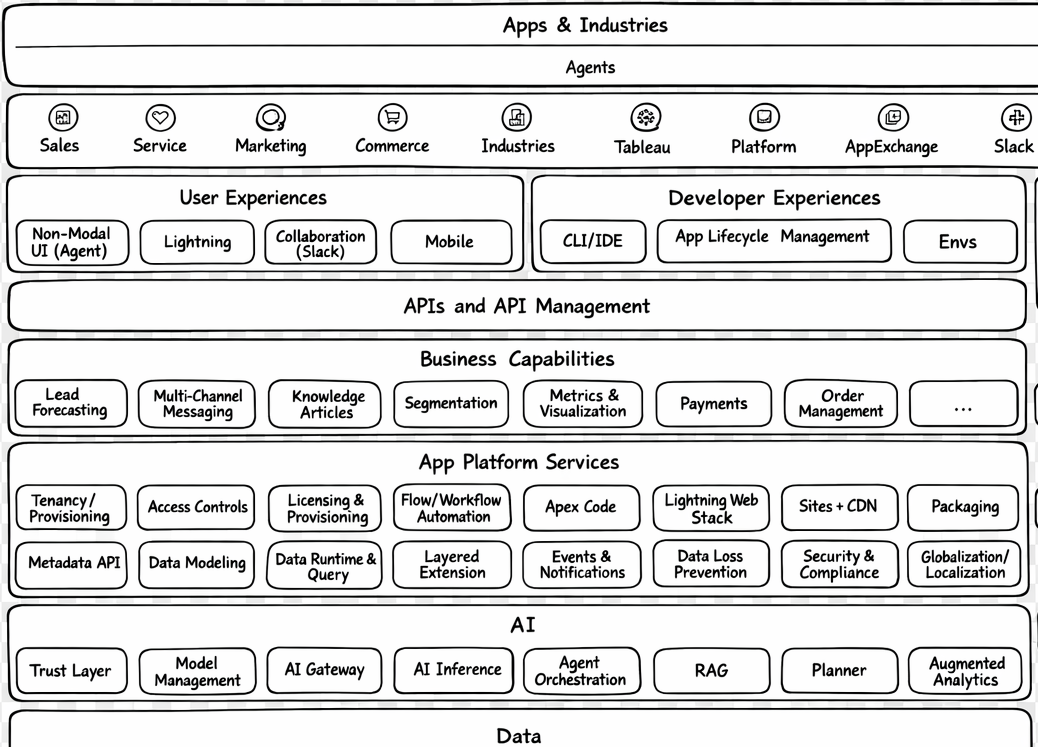
Despite the name, Salesforce supports far more than sales teams.
Common areas include:
Salesforce often becomes the system of record that connects multiple parts of a business.
Salesforce is designed to integrate with other software.
This means it can connect to:
These integrations allow organisations to avoid data silos and create a more connected technology landscape.
It’s especially effective when supported by clear decision-making, good design, and ongoing enablement.
If you’d like to explore Salesforce further, there are excellent resources available.
Salesforce places strong emphasis on:
Data security and compliance
Privacy and access control
Responsible use of AI
With tools like Agentforce, Salesforce applies trust principles to AI — including transparency, guardrails, and data protection — so organisations can use AI responsibly within their existing systems.
Salesforce sits within a broad landscape of business software. Many organisations either compare Salesforce with other platforms, or migrate to Salesforce as their needs grow.
Common platforms organisations consider or move between include:
In many organisations, spreadsheets are also used as a starting point — particularly Excel — before processes and data outgrow what manual tools can reasonably support.
Each platform has strengths. The right choice depends on:
Switching platforms is common as organisations mature. The key is understanding why a change is needed and what problem the platform is meant to solve.
If you’d like to discuss a project, explore Agentforce, or want to learn more about Salesforce for individual or group training? Get it touch
We need your consent to load the translations
We use a third-party service to translate the website content that may collect data about your activity. Please review the details in the privacy policy and accept the service to view the translations.